48 Hours to Make History — Trump’s Last Chance Deal With Iran Starts Tonight in Islamabad. There are moments in history when everything hangs by a thread. When the difference between war and peace comes down to a single conversation in a single city over a handful of hours. Tonight, that city is Islamabad. And the thread has never felt thinner.
Trump has extended the Iran ceasefire. But only for two days. JD Vance is getting on a plane and flying back to Pakistan tonight. Iran is publicly saying it will not come while privately packing its bags for Islamabad. And somewhere in the middle of all this chaos, Pakistan is still doing what it has done throughout this entire crisis holding things together with diplomacy, patience and a credibility that neither superpower can afford to throw away.
Here is everything that is happening right now and what it means. READ MORE
Why Trump Extended the Ceasefire
The original two-week ceasefire between the United States and Iran was set to expire today, April 21. Everyone who has been following this story knew that the deadline was coming. The question was whether either side would blink first.
Trump extended the ceasefire by about two days but signalled there would be no further extension if a deal was not reached. DAWN.COM
Two days. That is all that stands between the current fragile calm and a return to full-scale war in the Middle East. Trump is not being subtle about it either. On Monday, he told a PBS reporter that “lots of bombs will start going off” if no deal is reached before the ceasefire expires. CNN
This is Trump applying every bit of pressure he has before his team sits back down at the table tonight. Whether you find that approach reassuring or alarming, the message to Iran is crystal clear. This is your last chance.
What Iran Is Actually Doing
Here is where things get genuinely fascinating, because Iran is playing a double game that would make any poker player proud.
Iran’s Foreign Ministry spokesman came out publicly on Monday and said Washington had violated the ceasefire from the beginning, citing the US naval blockade of the Strait of Hormuz imposed on April 13 and the overnight capture of an Iranian container ship by the US military as breaches of both the truce and international law.
Officially, Iran is furious. Officially, Iran says there is no point in talks while America is strangling its ports with a naval blockade. Officially, Iran says the whole thing is a “media game” by Washington.
But officially is not the whole story.
The New York Times, citing two senior Iranian officials, reported Monday morning that a delegation from Tehran is making plans to head to Islamabad on Tuesday. CNN
So Iran’s government is publicly refusing to come while privately sending its delegation. This is not confusion. This is a strategy. Iran wants to look strong to its domestic audience while still keeping the door open diplomatically. It is the oldest trick in the book and it is working.
Who Is Coming to Islamabad Tonight
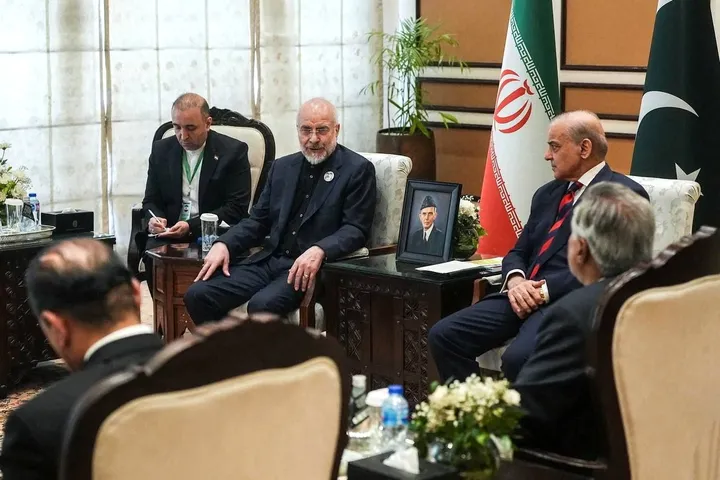
JD Vance, Special Envoy Steve Witkoff and the president’s son-in-law Jared Kushner, are expected to lead the American team. Trump confirmed to the New York Post that the same three officials who led the first round are returning for round two. Al Jazeera
The same three men who walked out of Islamabad without a deal two weeks ago are coming back to try again. That alone tells you something important. The US is not giving up on this. Despite all the threats and the posturing, Washington genuinely wants a deal. It just wants it on its own terms.
Pakistani officials expressed cautious optimism, saying the process was moving in a positive direction while stressing that a final agreement would require sustained engagement and compromise. Unlike the first round, these talks could run for several days, with the aim of agreeing on a framework for broader negotiations in the coming weeks and months.
Several days. That is a significant shift from the first round, where both sides tried to hammer out everything in one marathon 21-hour session and failed. This time, the approach seems more patient and more realistic.
What They Are Fighting Over
The issues that blew up the first round of talks have not disappeared. If anything, they have become more complicated.
The nuclear question remains the biggest sticking point. Trump has demanded that Iran fully reopen the Strait of Hormuz to ship traffic, which has slowed to a trickle since the war began on February 28. The de facto closure of the key shipping route has sent global oil prices spiraling, giving Iran a major source of leverage and spurring the US to impose a retaliatory naval blockade of Iran’s ports. CNN
Iran, for its part, has been equally firm. Iranian President Pezeshkian said on Monday that deep historical mistrust toward the US government remains, while unconstructive and contradictory signals from American officials carry a bitter message. He said Iranians do not submit to force. Al Jazeera
That statement captures exactly why these talks are so difficult. America is applying maximum pressure because it believes pressure produces results. Iran is resisting maximum pressure because surrendering under pressure would be seen at home as a humiliation. Neither side is wrong from their own perspective. And that is precisely the problem.
What Pakistan Has Been Doing
While the two sides trade threats and counter-threats in public, Pakistan has been working quietly and relentlessly behind the scenes to keep this process alive.
Iranian Ambassador Reza Amiri Moghadam said last week that Tehran would hold talks in Pakistan and nowhere else because we trust Pakistan. Google News That statement was made publicly. Iran trusts Pakistan. America trusts Pakistan. That trust is the only reason there is still a table for both sides to sit at.
Pakistan PM Shehbaz Sharif warmly welcomed the ceasefire extension and expressed deep hope that the Islamabad Talks would succeed in achieving sustainable peace. CNN
Field Marshal Asim Munir has traveled to Tehran and back. Foreign Minister Ishaq Dar has been on the phone with Iranian Foreign Minister Araghchi consistently. PM Sharif has traveled across the region, building support. This is Pakistan operating at the absolute peak of its diplomatic capacity.
What Happens If a Deal Gets Done
If Islamabad produces an agreement in the next 48 hours, the consequences for Pakistan and the world would be enormous.
The Strait of Hormuz would reopen fully and permanently. Global oil prices would fall sharply. Pakistan’s petrol prices, which have already come down significantly from their peak, would drop further. The rupee would strengthen. The economic pressure that has been squeezing ordinary Pakistani families for weeks would finally begin to ease in a meaningful and lasting way.
And Pakistan would be the country where one of the most significant peace deals in decades was signed. Not once, but twice. Right here in Islamabad.
What Happens If There Is No Deal
This is the part nobody wants to think about but everyone needs to consider.
If the talks collapse again and the ceasefire expires without an extension, the war resumes. Oil prices shoot back up overnight. The Strait of Hormuz closes again. Everything Pakistan has gained in terms of economic relief is reversed immediately. The region becomes more dangerous and more unstable.
Trump in a Truth Social post, boasted that the naval blockade is absolutely destroying Iran and declared that it will not be lifted until a deal is struck. CNN Iran has warned that its armed forces will respond accordingly if fresh aggression begins.
Neither side is bluffing. That is what makes the next 48 hours so genuinely critical.
The Bottom Line
Two days. That is what we have. JD Vance is flying to Islamabad tonight. Iran is coming whether it admits it or not. Trump has drawn his final line in the sand. And Pakistan is doing everything in its power to make sure the two sides actually reach across that line and shake hands.
This is the most consequential 48 hours in Islamabad’s modern history. What happens in this city tonight and tomorrow will echo far beyond Pakistan’s borders.
We will be updating this story as it develops. Stay with us.