How Did Pakistan End Up in the Middle of the World’s Biggest War? Not long ago, Donald Trump called Pakistan a strategic destabiliser. He cut aid and he sent angry tweets. He accused Islamabad of sheltering terrorists while taking American money. The relationship between Washington and Pakistan was cold, transactional, and deeply mistrustful. Today, the same Donald Trump is publicly praising Pakistan’s army chief by name. His vice president has flown to Islamabad twice in two weeks. And the White House has officially declared Pakistan the only mediator in the most consequential peace negotiation on the planet right now.
How on earth did this happen?
The story of how Pakistan went from being sidelined to being the centre of the world’s attention is one of the most surprising diplomatic transformations in recent memory. And it is worth understanding properly, because most of what is being written about it misses the deeper picture. READ MORE
It Did Not Start With the War
Most people think Pakistan’s involvement in the US-Iran crisis began when the bombs started falling on February 28. That is not quite right.
The close personal rapport between President Trump and Field Marshal Asim Munir was already well established before the war broke out. Pakistan had formally nominated Trump for the Nobel Peace Prize after he apparently brokered a ceasefire between India and Pakistan in May 2025. Munir was invited to a private White House lunch by the president in June of that year and invited back to the Oval Office in September with Prime Minister Shehbaz Sharif to discuss US investment in Pakistan’s critical minerals sector. Wikipedia. That relationship, quietly built over months, is what made Pakistan’s involvement possible when the crisis hit. Trump trusted Munir. And that trust, when the Middle East caught fire, suddenly became the most valuable diplomatic asset in the world.
Pakistan also has a history that is longer than most people remember. In July 1971, during a visit to Pakistan, US National Security Advisor Henry Kissinger secretly flew from Islamabad to Beijing, completing a historic trip that reshaped the Cold War landscape. Then-Pakistani President Yahya Khan played an irreplaceable role as messenger and facilitator, transmitting messages between Washington and Beijing that forged the initial bond of trust, breaking 22 years of frozen Sino-US relations and paving the way for Nixon’s visit the following year. From brokering the opening between America and China in 1971 to mediating between America and Iran in 2026. Pakistan has been here before. The world just forgot.
What Made Pakistan the Only Logical Choice
When the US-Iran war began and both sides realised they needed a way to communicate without publicly admitting it, the question became which country could play that role. It is a harder question than it sounds.
The mediator had to have credibility with both Washington and Tehran simultaneously. That rules out most of the world immediately. America’s allies in Europe have no meaningful relationship with Iran. China has relationships with both but carries its own geopolitical baggage that makes Washington uncomfortable. The Arab states are on America’s side of the fence. Russia is in no position to be trusted by anyone right now.
Pakistan is the only actor that has military and security ties with both Washington and Tehran. Pakistan hosts no US military bases and is one of the few countries that maintained functional relations with Iran throughout decades of Western sanctions. At the same time, its military relationship with the US, built over decades, gives it genuine access to the highest levels of American decision-making. CNBC Iran’s own ambassador said it plainly: Tehran would do talks in Pakistan and nowhere else, because we trust Pakistan. Al Jazeera. That statement from the Iranian ambassador is extraordinary when you think about it. Iran, a country that trusts almost nobody right now, publicly declared its trust in Pakistan. That is not something you can manufacture overnight. That is trust built over years of consistent, quiet engagement.
What Pakistan Actually Did
The public narrative around Pakistan’s role has focused heavily on the Islamabad Talks of April 11 and 12. But the real work happened long before those talks began, and has continued relentlessly ever since.
On March 31, Pakistan delivered a five-point initiative for peace, calling for an immediate end to all hostilities and the allowance of humanitarian aid into the region. This was before either side had publicly admitted they wanted to negotiate. ProPakistani When the ceasefire was agreed on April 8, Pakistani authorities immediately declared public holidays for April 9 and 10 in Islamabad to facilitate the upcoming talks. ProPakistani. The city was ready before the world even knew the talks were happening.
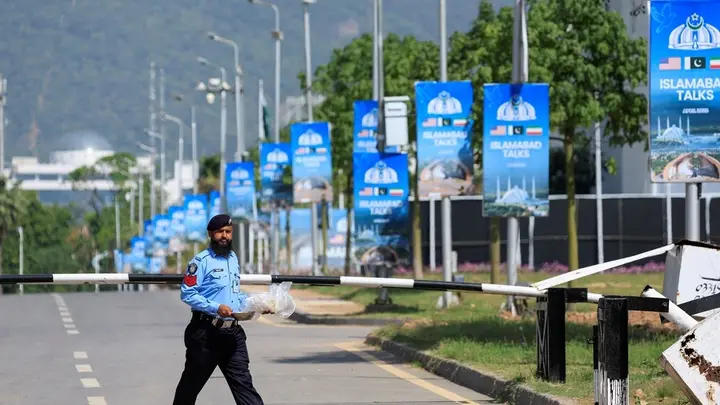
The Islamabad Talks themselves involved a 300-member US negotiating team led by JD Vance, Witkoff, and Kushner, a 70-member Iranian team led by parliamentary speaker Ghalibaf and foreign minister Araghchi, and a Pakistani mediating team led by PM Shehbaz Sharif, Field Marshal Asim Munir, and Foreign Minister Ishaq Dar. The talks lasted 21 hours across three rounds. ProPakistani When those talks ended without a deal, Pakistan did not give up. Pakistani authorities began referring to the negotiations as part of a broader Islamabad process, framing the engagement as an ongoing diplomatic track rather than a single event. ProPakistani. That framing mattered. It kept both sides at the table psychologically even when they were not physically in the same room.
Pakistan’s Role:
Field Marshal Munir then flew to Tehran personally, carrying messages between Washington and Tehran that neither side would publicly acknowledge. PM Sharif travelled to Saudi Arabia, Qatar and Turkey to build regional support. Foreign Minister Dar was in constant phone contact with both sides.
Trump himself confirmed that the ceasefire extension came at the request of PM Shehbaz Sharif and Field Marshal Asim Munir. PM Sharif later thanked Trump for accepting Pakistan’s request, saying Islamabad would continue its earnest efforts for a negotiated settlement. XS Read that again. The President of the United States extended a war ceasefire because Pakistan asked him to. That is not a small thing. That is Pakistan exercising genuine influence at the highest possible level.
What the World Is Saying About Pakistan
The international reaction to Pakistan’s diplomatic performance has been remarkable, and it is worth documenting because Pakistanis deserve to know how their country is being seen right now.
For a country still mired in conflicts with its neighbours and viewed until recently by Trump as a strategic destabiliser, Pakistan’s emergence as a peacemaker is nothing short of a dazzling reinvention. Islamabad’s achievements in securing a ceasefire between the US and Iran and bringing the two warring parties together for their first high-level direct engagement since 1979 are not to be underestimated. Wikipedia France’s President Macron praised the Islamabad process. Germany’s foreign minister called on Iran to engage in talks for the people’s sake, implicitly endorsing Pakistan’s approach. Hamas welcomed the talks. The UN Secretary-General expressed strong support. Even countries that are usually reluctant to credit Pakistan for anything have been quietly acknowledging that what Islamabad has done here is genuinely impressive.
Pakistan’s bridge diplomacy spanning more than half a century clearly reflects that the international order has reached a new crossroads. From the Sino-US Cold War thaw in 1971 to mediating between the US and Iran in 2026, Pakistan once again stands at a critical juncture in global structural transformation. Wikipedia
What Pakistan Gets in Return
This is where the analysis has to be honest, because the picture is not entirely rosy.
Pakistan’s keen interest in fostering partnerships with the US in sectors relating to cryptocurrency, critical minerals, and counterterrorism has fuelled speculation about the dividends it may expect from its role as peacemaker. Initial hopes of attracting investments worth $25 billion through the Special Investment Facilitation Council have fallen significantly short of the target, but there are indications that Pakistan could look to realise its goals by leveraging its warm ties with the Trump administration. Wikipedia Saudi Arabia’s $3 billion deposit in Pakistan’s central bank, announced just days after Pakistan hosted the first round of talks, was not a coincidence. Pakistan’s diplomatic usefulness to the Gulf states has translated into real financial support at a moment when Pakistan needed it badly.
But history also offers a cautionary note. In 1971, Pakistan hoped that in exchange for facilitating the US-China breakthrough, Washington would help prevent the breakaway of East Pakistan as Bangladesh. It did not, being no more than a symbolic gesture. A wise leadership in Islamabad would not hope for too much from any fresh promises made by the current administration in Washington. Wikipedia Pakistan has been here before. The applause is real. Whether the lasting benefits will be real is a different question entirely.
Why This Moment Still Matters
Whatever happens next in the US-Iran negotiations, whatever deals are or are not struck in the coming days and weeks, something has already changed permanently.
Pakistan has demonstrated to the world that it is not just a country to be managed or worried about. It is a country that can be counted on when the stakes are highest. A country that can sit in the same room as the world’s most powerful nation and the world’s most isolated one, and find a way to keep them talking.
A Pakistani official said it best: had the ceasefire not been secured through Pakistan’s intervention, tireless diplomacy, and persistent efforts, the situation today could have been far worse. XS That is understated in the way that only diplomats can be. The truth is that Pakistan may have helped prevent a war from becoming something far more catastrophic. And it did so not through military power or economic strength, but through relationships, credibility, and the kind of patient, unglamorous diplomatic work that rarely makes headlines until suddenly it makes all of them. From crisis to centre stage. From strategic destabiliser to global peacemaker.
Pakistan did not stumble into this moment. It earned it.