2000 Years of Popes — And America Finally Gets One. For roughly two thousand years, the Catholic Church has been led by men who came, almost without exception, from the same part of the world. Europe. Italy in particular. The Vatican is in Rome. The papacy felt, for most of its history, like a deeply European institution. Even when the church expanded across continents, even when it built cathedrals in every corner of the globe, the man at the top almost always had a European passport.
Then on May 8, 2025, white smoke rose from the chimney above the Sistine Chapel. The bells of St. Peter’s Basilica rang out. And when the name was announced to the enormous crowd gathered in St. Peter’s Square, there was a moment of genuine confusion. Almost nobody recognized the name. A few gasped. Some looked at each other blankly.
Robert Francis Prevost. From Chicago, Illinois.
The first American pope in the entire history of the Catholic Church had just been elected. And the world was not quite prepared for it.
A Boy From Chicago’s South Side
To understand who Pope Leo XIV is, you have to go back to where he started. Not Rome. Not a grand European seminary. A modest home in Dolton, a suburb just south of Chicago, where a boy named Robert Prevost grew up the son of a school principal and a librarian.
Robert Prevost was born on September 14, 1955, in Chicago and raised in the nearby suburb of Dolton. His parents were Louis Marius Prevost, an educator, and Mildred Martínez, a librarian. His family attended St. Mary of the Assumption Parish, and by all accounts it was a faith-filled household. Robert and his brothers served as altar boys. His family participated as musicians and lectors. There was nothing about his upbringing that screamed future pope. He was, as a childhood friend later recalled, just one of us. Profit by Pakistan Today
Like many Americans, Prevost comes from a background that reflects the diversity of both the United States and the Catholic Church. His family’s roots include Spanish, Cuban, Italian, French Canadian, and African American Creole ancestry. His maternal grandparents, who migrated to Chicago from Louisiana, were described in historical records as Black or mulatto. CNN
That mixed heritage, deeply American in its complexity, would later become part of what made him such a distinctive choice to lead a global church trying to speak to the whole of humanity rather than just one corner of it.
The Road to Rome — Through Peru
After graduating from Villanova University in 1977 with a bachelor’s degree in mathematics — yes, mathematics — Prevost entered the Order of Saint Augustine and was ordained as a priest in 1982. He then did something that set him apart from most of his peers in the church hierarchy. Then he went to Peru.
He mostly served in Peru until returning in the late 1990s to Chicago, where he was elected to lead the Augustinians’ Midwest province in 1999. He was subsequently twice elected prior general, or top leader, of the Augustinian religious order. Wikipedia
Those years in Peru mattered enormously. Prevost was not a career Vatican bureaucrat climbing the institutional ladder in Rome. He was a missionary. A parish pastor. A seminary teacher. A man who spent decades working alongside ordinary people in one of South America’s most challenging dioceses. When Pope Francis appointed him Bishop of Chiclayo in Peru in 2015, Prevost had already spent more of his adult life outside the United States than inside it.
That experience — of being an American who lived and worked in the developing world for decades — gave him a perspective that neither a career European cleric nor a purely American one could have had. He understood poverty from proximity. He understood immigration not as a political abstraction but as something he had watched reshape communities in real time.
The Conclave Nobody Expected
When Pope Francis died on April 21, 2025, the Catholic world began the ancient, secretive process of choosing his successor. Following the death of Pope Francis, the 133 cardinals gathered to elect a new pope for the Catholic Church in the secret conclave in Rome. Wikipedia
Most of the pre-conclave analysis focused on European and Latin American candidates.For centuries, people considered the idea of an American pope unlikely—almost impossible. Many believed America was too powerful, too politically charged, and too closely tied to a specific vision of global politics for its cardinal to be trusted with leading a truly global institution.
And yet.
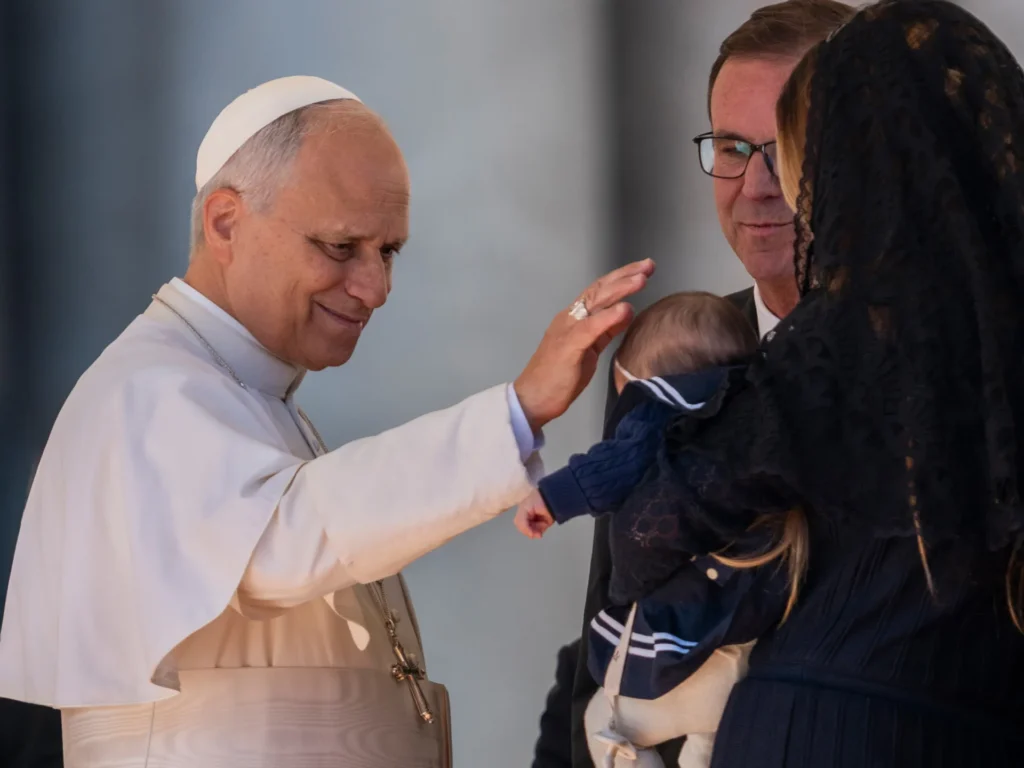
The US-led conservative push ended up doing the opposite of what it intended—it quietly consolidated support for a dark-horse candidate, Cardinal Robert Prevost, the Chicago-born head of the Vatican’s Dicastery for Bishops. During secret dinners, the British Ambassador to the Holy See and Cardinal Vincent Nichols, Archbishop of Westminster, brought together fourteen cardinals from the British Commonwealth. Some of them had worked with Prevost and liked his style, and were ready to put their weight behind him. XS
The Fourth Ballot That Changed History
On the morning of May 8, each of the 133 cardinals wrote the name of their chosen candidate on their ballot, folded it carefully, and carried it solemnly to the altar. The atmosphere in the Sistine Chapel was one of complete silence. CNBC
His selection on the fourth ballot ended the search for a successor to Pope Francis. When Cardinal Mamberti stepped forward on the balcony and announced the name Robert Francis Prevost, the crowd in St. Peter’s Square erupted — first in confusion, then in joy. A selection happened on the second day of the conclave after the first ballot on Wednesday was inconclusive.
Back in Chicago, Prevost’s brother John heard the news and could barely find the words. He said it was too unreal and that he had not had time to think about it yet, calling it a tremendous thing to take in but something to be very proud of. Fortune
What Kind of Pope Has He Been?
In the nearly one year since his election, Pope Leo XIV has shown himself to be a man of genuine conviction who is not afraid to use his platform — even when it puts him in direct conflict with the most powerful people in the world.
In his role as pope, Leo condemned the US-Israeli war with Iran in April 2026, calling for an end to the violence and escalation of threats. He said we must remember especially the innocent — children, the elderly, the sick — so many people who have already become or will become victims of continued warfare. Profit by Pakistan Today
Those words did not go down well in Washington. After the pope suggested that a delusion of omnipotence was fueling the 2026 Iran war, President Donald Trump directly criticized him in a Truth Social post. Pope Leo, for his part, was unmoved. He said he has no fear of the Trump administration or speaking out loudly the message of the Gospel, which is what he believes he is here to do and what the church is here to do. Al JazeeraCNN
That is not the voice of a man who was elected to be comfortable or politically convenient. It is the voice of someone who takes seriously the idea that the church should speak for those who have no other voice.
On artificial intelligence, Leo has been equally forthright. Time magazine included Leo among the world’s 100 most influential people in artificial intelligence in 2025, and he has introduced new warnings about the use of AI technology. For a man who studied mathematics as an undergraduate, the ethical questions surrounding technology are not abstract. They are urgent. Al Jazeera
Why This Moment Matters Beyond Religion
Even for people who are not Catholic, the election of Pope Leo XIV represents something worth paying attention to. The Catholic Church has 1.4 billion members worldwide. Its positions on poverty, immigration, war, the environment, and human dignity carry enormous weight in political conversations across every continent.
Following the precedent of Pope Leo XIII, who developed modern Catholic social teaching amid the tumult of the Second Industrial Revolution, Prevost chose the papal name Leo XIV both to echo Leo XIII’s concern for workers and fairness and as a response to the challenges of a new industrial revolution and artificial intelligence. Al Jazeera
A man who grew up on Chicago’s South Side, who spent decades in the mission fields of Peru, who speaks five languages, who studied mathematics and canon law, who watched his own family’s mixed-race immigrant heritage shape his understanding of what it means to be human — this is the man now leading the world’s largest Christian denomination.
For a church that has spent two thousand years looking mostly in one direction, it is a remarkable turn.
The white smoke rose. The bells rang. A boy from Dolton, Illinois stepped onto the balcony of St. Peter’s Basilica.
And history moved.