Is This Finally the Breakthrough? Iran Puts a New Offer on the Table. For weeks now, the negotiations between the United States and Iran have been going in circles. America wants Iran’s nuclear programme dealt with before anything else. Iran wants the US naval blockade lifted before it will talk about anything. Both sides have been standing on their positions like two people in a doorway, neither willing to step aside, and the rest of the world has been waiting anxiously for one of them to move.
This week, Iran moved.
Tehran has put a brand new proposal on the table — a phased deal that separates the two biggest issues blocking progress and tries to solve the easier one first. The proposal was passed directly to the Americans through Pakistani mediators. Trump’s national security team is reviewing it as you read this. And while nobody is celebrating yet, the fact that this offer exists at all tells you something important about where this conflict is heading.
Here is what Iran is actually proposing and why it matters.
What Iran Is Offering — The Full Picture
Iran gave the US a new proposal to reopen the Strait of Hormuz and end the war, with nuclear negotiations postponed for a later stage, according to a US official and two sources with knowledge of the matter. ProPakistani
In plain language, Iran is saying this. We will reopen the Strait of Hormuz. We will agree to end the war and we will stop blocking global oil supplies. But we are not ready to talk about our nuclear programme right now. That conversation can happen later, once the immediate crisis is resolved.
The plan, conveyed through mediators in Pakistan to break a stalemate with Washington, calls for extending the ceasefire so the parties can work toward a permanent end to the fighting, with nuclear talks coming only after the US blockade of Iranian ports is lifted. XS
This is a significant shift from Iran’s previous position. Up until now, Tehran had been presenting its demands as one package — lift the blockade, end the war, and stop pressuring us on nuclear issues all at the same time. Now Iran is unbundling those demands and offering to solve the most urgent economic crisis first.
The question is whether Washington sees this as a genuine step forward or a trap.
Why Iran Is Making This Move Now
Understanding why Iran put this proposal on the table requires understanding the pressure Iran is operating under right now.
The Iranian leadership is divided about what nuclear concessions should be on the table. Araghchi made it clear to Pakistani, Egyptian, Turkish and Qatari mediators over the weekend that there is no consensus inside the Iranian leadership about how to address the US demands on the nuclear programme. ProPakistani
That internal division is the key to everything. Iran’s moderate faction, led by President Pezeshkian and Foreign Minister Araghchi, wants to find a way out of this war. They understand the economic damage being done to ordinary Iranians by the combination of the conflict itself, the US naval blockade, and the closed Strait of Hormuz. They want a deal.
But Iran’s hardliners, clustered around the Revolutionary Guards and aligned with the new Supreme Leader, are deeply suspicious of any agreement that involves concessions on the nuclear programme. For them, the nuclear programme is not just a strategic asset. It is a symbol of Iranian sovereignty and resistance to American pressure. Giving it up, or even pausing it, feels like surrender.
The Iranian proposal would bypass the nuclear issue entirely as a route to a faster deal. But lifting the blockade and ending the war would remove President Trump’s main leverage in any future talks to remove Iran’s stockpile of enriched uranium. ProPakistani
So Iran is essentially saying — let us solve what we can agree on, and leave the hard part for later. The moderates are trying to get something done before the window closes entirely.
How Pakistan Made This Happen
Here is the part of this story that deserves far more attention than it is getting in international media.
This proposal exists because of Pakistan. Full stop.
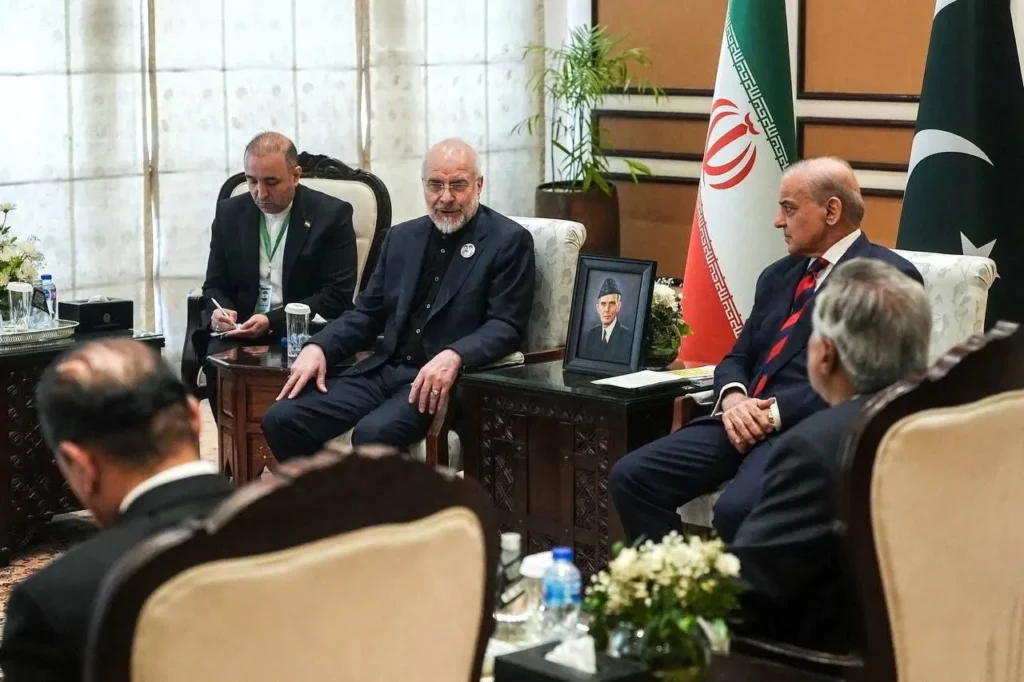
Araghchi raised the plan to bypass the nuclear issue during his meetings in Islamabad over the weekend. The new proposal was given to the US via Pakistani mediators. ProPakistani
Think about what that means practically. Iran’s foreign minister flew to Islamabad twice in two days. He sat with Field Marshal Asim Munir and Foreign Minister Ishaq Dar. He worked through the details of a new proposal with Pakistani officials. And Pakistan then carried that proposal directly to the American side.
Without Pakistan in the middle, this offer does not exist. Without the trust that both sides have placed in Islamabad throughout this process, there is no channel through which an offer like this could even be transmitted. Pakistan is not just a venue for these talks. It is an active, essential part of the diplomatic machinery that is keeping this process alive.
Araghchi also visited Oman over the weekend, where talks focused on the Strait of Hormuz and a potential mechanism that would enable Iran to collect tolls from vessels passing through. He then traveled to Moscow on Monday to meet Russian President Vladimir Putin, who praised the Iranian people for bravely and heroically fighting for their sovereignty and vowed to do everything possible to bring peace to the Middle East. CNN
Iran is building its diplomatic coalition while Pakistan carries its message to Washington. This is a country that has spent weeks looking isolated and cornered now working its network actively and effectively.
What America Is Saying
The American response to Iran’s phased proposal has been cautious, and in the case of Secretary of State Marco Rubio, fairly direct about the problem with it.
Trump’s national security team is reviewing the Iranian plan at a Situation Room meeting on Monday, according to three US officials, with discussions focusing on the stalemate in negotiations and potential next steps. Wikipedia
But even as the review happens, Secretary of State Marco Rubio appeared to rule out any deal that excludes Iran’s nuclear programme, saying the US cannot let Iran get away with it and that any agreement made must definitively prevent Iran from sprinting towards a nuclear weapon at any point. CNBC
Rubio also pushed back hard on the Strait of Hormuz question in separate remarks. He said the US cannot tolerate Iran trying to normalize a system in which Iranians decide who gets to use an international waterway and how much they have to pay to use it. Wikipedia
And Trump himself has been clear throughout this process about what he considers non-negotiable. Trump said one of his conditions is that Iran will not have a nuclear weapon, adding that everything else will be peanuts compared to that if Iran were ever given a nuclear weapon. CNN
So the gap between the two positions remains real and significant. Iran wants to take nuclear talks off the table for now. America says nuclear talks are the whole point. That contradiction has not been resolved by this new proposal. It has simply been deferred.
Why This Proposal Is Both Promising and Dangerous
Here is the honest analysis of Iran’s phased deal offer, because it deserves to be looked at clearly from both sides.
The case for accepting it, or at least engaging with it seriously, is straightforward. The closure of the Strait of Hormuz is causing enormous economic damage across the world. This single choke point is driving up petrol prices in Pakistan, disrupting global oil markets, straining shipping routes, and fueling inflation in dozens of countries.
If Iran agrees to reopen the strait permanently in exchange for the United States lifting its naval blockade, it would immediately remove a significant portion of this global economic pressure.
Since the war began, the conflict has killed at least 3,375 people in Iran. In Lebanon, where Israel resumed fighting against the Iran-backed Hezbollah group just two days after the war started, at least 2,521 people have died. The violence has also killed 23 people in Israel and more than a dozen in Gulf Arab states.
The conflict has claimed the lives of fifteen Israeli soldiers in Lebanon, thirteen US service members in the region, and six UN peacekeepers in southern Lebanon.
Those numbers alone make a strong case for taking any serious peace offer seriously.
But the case against accepting the phased deal is also real. Lifting the blockade and ending the war would remove President Trump’s leverage in any future talks to remove Iran’s stockpile of enriched uranium and convince Tehran to suspend enrichment — the two primary war objectives for the US. ProPakistani
Once the immediate crisis is resolved and the economic pressure is lifted, what incentive does Iran have to return to the negotiating table and give up something as politically sensitive as its nuclear programme? The history of US-Iran diplomacy does not inspire confidence that deferred conversations ever actually happen.
What This Means for Pakistan and Ordinary Pakistanis
For Pakistan, this new proposal represents both an opportunity and a responsibility.
The opportunity is clear. If Pakistan can help bridge the gap between Iran’s phased deal offer and America’s insistence on nuclear talks being part of any agreement, it would be the most significant diplomatic achievement in the country’s recent history. The fact that Iran chose to transmit this proposal through Pakistani mediators is itself a statement of trust and confidence in Islamabad’s role.
For ordinary Pakistanis, the economic stakes are direct and personal. Countries in the region get 80% of their oil supply through the Strait of Hormuz, and Australia and regional nations have been disproportionately affected by its closure. Pakistan, which imports nearly all of its oil, is living the consequences of the closed strait every time someone fills up their tank or pays their electricity bill. Wikipedia
A deal that reopens the Strait of Hormuz permanently would bring meaningful and lasting relief to Pakistan’s energy costs, help stabilise the rupee, ease inflation, and give the government room to breathe economically. It would not solve everything. But it would solve a great deal.
]