The Most Dangerous 24 Hours of 2026 — What Happens Today in the Strait of Hormuz. If you went to sleep last night thinking the world was edging toward peace, this morning’s headlines will have been a rude awakening. Because while diplomats were talking about deals and proposals and progress, the guns in the Strait of Hormuz were not listening.
Overnight, the United States and Iran traded fire in the Strait for the second time in 72 hours. Iranian missiles and drones hit American warships. US forces responded by striking Iranian military facilities on the coast. And then, in the middle of all of it, something strange happened. Both sides stepped back, took a breath, and said the ceasefire is still in effect.
Welcome to what might be the most dangerous 24 hours of 2026. And also, possibly, the closest this war has come to ending.
Here is exactly what is happening today and why it matters for every single person on the planet including every Pakistani watching their petrol prices and electricity bills.
What Happened Overnight: The Full Picture
US forces targeted Iranian military facilities responsible for launching a series of unprovoked missile, drone and small boat attacks against warships transiting the Strait of Hormuz, US Central Command said on Thursday. CNN
A spokesperson for Iran’s armed forces said the US airstrikes hit civilian areas along the coasts of Qeshm Island, Bandar Khamir and Sirik. So both sides are telling different stories about what exactly was hit and why. That is not surprising. It has been the pattern throughout this entire conflict. America says it targets military infrastructure. Iran says civilians are being hit. The truth, as always in war, is somewhere in the middle and very difficult to verify from the outside.
What is not in dispute is that both sides fired at each other. Again. Despite a ceasefire technically still being in place. Following the exchange of fire in the past few hours, the situation on Iranian islands and coastal cities by the Strait of Hormuz is back to normal now, said Press TV. There have been no reports so far of civilian casualties, the Islamic Revolutionary Guard Corps said. CNN
Back to normal. In a war zone. That phrase says everything about how dangerously normalised this conflict has become over the past 70 days.
Trump’s Warning — Sign Fast or Face Consequences
After the overnight exchanges, Trump did what Trump does. He went on Truth Social. And what he wrote should be read very carefully by anyone hoping for peace.
Trump said American forces destroyed Iranian attackers and warned that the US would knock them out a lot harder and a lot more violently if Iran does not sign a deal soon. He also said the ceasefire is still in effect and that Iran trifled with us. Sign fast. That is the message. America is not going anywhere. The naval blockade is not being lifted. The military capability to escalate is real and demonstrated. And Trump’s patience is always limited, is running out. Trump also addressed the peace proposal, saying a US proposal to end the war is more than a one-page offer and that Iran has not yet finalised its response.
More than one page. Earlier this week, reports had described it as a simple one-page framework. Now, Trump is saying it is more comprehensive than that. This suggests the proposal has evolved over the past few days of back-channel communication through Pakistan. The details are not public but the direction of travel is.
Where Is the Peace Deal Right Now
This is the question that matters most today. And the honest answer is that it is in Tehran, being reviewed by Iranian officials.
Iran’s government is reviewing the latest US peace proposal, Foreign Ministry spokesman Esmaeil Baqaei said, adding that Tehran would convey its position on the proposal to Pakistani intermediaries after finalising its response. Pakistani intermediaries. Once again, the channel runs through Islamabad. Iran is not going to call Washington directly. It is going to call Pakistan. And Pakistan will carry whatever Iran says to the American side.
Neither the Trump administration Tehran nor Pakistan have confirmed any details of the latest iteration of the peace proposal, which is the result of weeks of back-and-forth negotiating led by Islamabad. Weeks of back and forth led by Islamabad. That sentence does not get enough attention. Pakistan has been running this process physically, diplomatically and logistically for nearly two months. Every proposal, every counterproposal, every message that has moved between Washington and Tehran has gone through Pakistani hands at some point.
Iran’s threat to shipping in the Strait of Hormuz, and its willingness to accept major concessions on its nuclear programme, are the central issues in any deal. Those two things, the Strait and the nuclear programme, remain the heart of the disagreement. America wants both resolved. Iran wants to deal with the Strait first and nuclear issues later. That gap, which has defined every round of talks, has not been fully bridged yet.
Trump Says Iran Has Agreed, Iran Says Not Yet
Here is where Thursday got genuinely confusing, even by the standards of this conflict. Trump said to reporters that Iran’s offer basically said they will not have nuclear weapons, they are going to hand us the nuclear dust and many other things we want. In terms of whether Iran has agreed to that, Trump said they have agreed.
Iran agreed. Trump said it clearly, to reporters, on camera. And then Iranian media said something completely different. According to Iranian media, Tehran has not yet finalised its response to the US proposal. So Trump says they agreed. Iran says they have not finalized their response yet. Both cannot be fully correct at the same time. This contradiction is not new it has happened multiple times throughout this process. Trump has a habit of describing progress in the most optimistic possible terms, sometimes ahead of where the actual negotiations are. Iran has a habit of being publicly cautious while privately moving faster than its official statements suggest.
The truth is probably somewhere in the middle. There may be agreement in principle on certain points while the final language and formal confirmation are still being worked out. That is how complex diplomatic negotiations actually function: you can agree on something in a phone call or a back-channel message and still spend days working out the precise wording that both sides can publicly claim as a victory.
The Dual Blockade Nobody Talks About
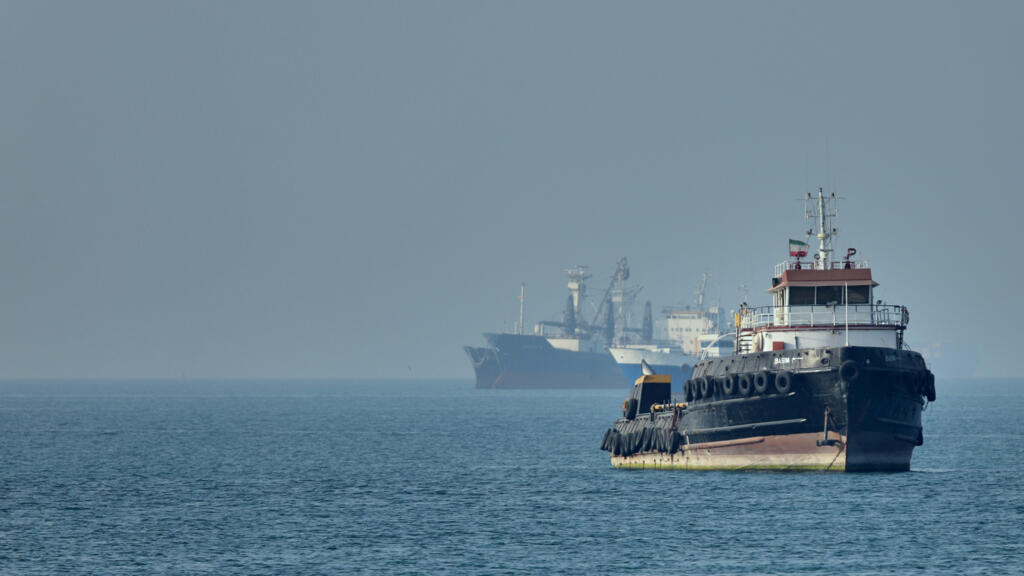
The situation was described as a dual blockade, with the US Navy blockading Iran and Iran blockading the Persian Gulf. Two blockades. Simultaneously. In one of the world’s most critical shipping lanes. While a conditional ceasefire is in place, almost no shipping has used the strait and it remains effectively closed. Pre-conflict, around 3,000 vessels used the strait each month. Their numbers now stand at around 5% of this level. Al Jazeera
Five per cent. The Strait of Hormuz, through which roughly a quarter of the world’s seaborne oil trade normally flows, is operating at five per cent of its normal capacity. The economic damage being done every single day this situation continues is almost impossible to calculate in full. Around 20% of global petroleum and 20% of liquefied natural gas traverse the strait each year.
For Pakistan, a country that imports almost all of its oil and whose petrol prices are now sitting at Rs 399 per litre up dramatically from Rs 266 before the war started the closure of this waterway is not a distant geopolitical abstraction. It is the reason every trip to the petrol station costs significantly more than it did three months ago.
Lebanon Is Complicating Everything
There is a dimension to this conflict that does not get enough attention in Pakistani media, and it is making a deal significantly harder to reach. The ongoing fighting in Lebanon has remained a major complicating factor in efforts by Pakistan to broker a diplomatic end to the war between the US and Iran. Tehran has thus far refused to agree to any wider peace deal that does not include a halt to Israel’s fight with Hezbollah in Lebanon.
Destruction in Lebanon from Israeli airstrikes continued Thursday, with at least 12 killed and dozens wounded, according to the country’s health ministry. A paramedic and a child were among those killed in the past 24 hours. Iran will not sign a deal that leaves Hezbollah and Lebanon exposed to continued Israeli strikes. America will not tie an Iran deal to Israel’s military operations in Lebanon. That contradiction, which neither side has found a way around yet, is one of the most significant obstacles remaining to a final agreement.
The third round of talks between Israel and Lebanon is set for next Thursday and Friday in Washington DC. Those Lebanon talks next week could matter enormously for the Iran deal timeline. If Israel and Lebanon make progress, Iran may feel more comfortable signing an agreement that does not explicitly resolve the Lebanon situation. If those talks collapse, Iran’s refusal to sign anything without Lebanon included becomes even more entrenched.
Iran’s New Rules for the Strait
Even as negotiations continue, Iran is making it very clear that it does not intend to simply hand back control of the Strait of Hormuz the way it was before the war. Traffic in the Strait of Hormuz will be controlled in the future under a new system that will likely reflect a new balance of power and security considerations in the region, with bordering states Iran and Oman playing a central role, Iranian state media reported. That is a significant statement. Iran is not saying the Strait will reopen the way it was before. It is saying the future governance of the strait will be different, with Iran having a formal role in deciding who gets to use it and under what conditions.
Tehran has laid out new rules for ships seeking to cross the Strait of Hormuz, according to a document seen by CNN. America’s response to the idea of Iran controlling the world’s most important oil shipping route has been predictably firm. Rubio said the US cannot tolerate Iran trying to normalise a system in which Iranians decide who gets to use an international waterway and how much they have to pay to use it.
This is the fundamental disagreement underneath everything else. Who controls the Strait of Hormuz? International law says it is open to all. Iran says decades of American dominance in the region have changed the reality on the ground. America says no single country gets to control a waterway that affects the entire world’s economy.
Resolving that question — even partially — is what any lasting deal will need to accomplish.
What Happens in the Next Few Hours
Today is the day Iran is supposed to give its response to the American proposal through Pakistani mediators. Whether that response comes today or gets delayed again is something nobody outside the room knows for certain. Secretary of State Marco Rubio said the US is expecting a response from Tehran on its latest peace proposal at some point today. At some point today. The US is waiting. Pakistan is waiting. The world is waiting. Trump said the ceasefire remains in effect. You won’t have to know if there’s no ceasefire, he told reporters. You’ll just have to look at one big glow coming out of Iran. CNN
That is not subtle. Trump is telling Iran, in front of cameras, that the alternative to a deal is the kind of military strike that would be visible from space. That is maximum pressure applied at maximum volume at exactly the moment when Iran is sitting down to finalise its response.
Whether that pressure produces the result Trump wants or hardens Iran’s position is the question that today will be answered.
The Bottom Line
Seventy days into the most consequential conflict of the 21st century so far, the world is sitting in an extraordinary and deeply uncomfortable place. Both sides are firing at each other and calling it a ceasefire. Both sides are negotiating and denying they are negotiating. A deal might be hours away or weeks away or might fall apart entirely.
And right in the middle of all of it, Pakistan is still there. Still the channel and still the trusted intermediary. Still, the country that Iran will call with its response and that America is relying on to deliver that response accurately and quickly.
For Pakistan, for the 23,000 sailors stranded in the Persian Gulf, for every country watching oil prices and inflation and wondering when this ends today matters enormously.
Watch this space. We will update this story the moment Iran’s response comes through.