In Islamabad, but Not Talking. Iran’s Strange Game That Has the World Confused. Something genuinely bizarre is happening in Islamabad right now. And if you have been following this story for the past two weeks, you will know that bizarre has become the default setting for these negotiations.
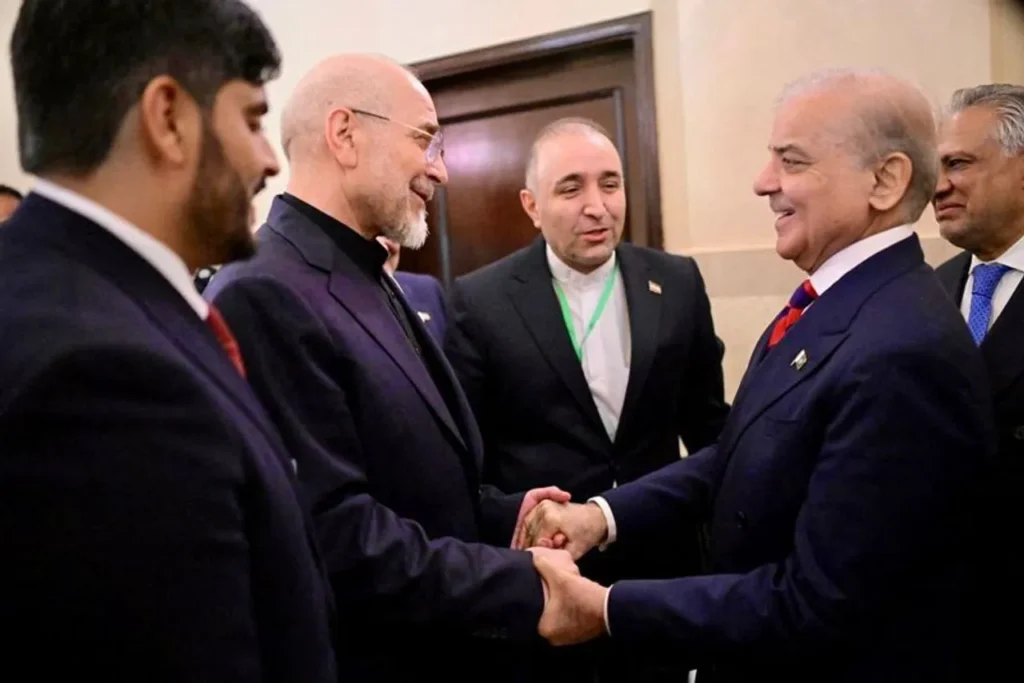
Iran’s Foreign Minister Abbas Araghchi landed at Nur Khan Airbase in Rawalpindi last night. He was received on the tarmac by Foreign Minister Ishaq Dar and Field Marshal Asim Munir personally. Photos were taken. Statements were issued. Pakistan officially confirmed its arrival and said meetings about regional peace and stability would follow.
And then Iran’s Foreign Ministry spokesperson got on social media and said there are no plans for any meeting between Iran and the United States.
Both of these things happened within hours of each other. Welcome to the strangest diplomatic situation of 2026.
What Is Actually Happening on the Ground Right Now
Let us start with what we know for certain, because the facts themselves are dramatic enough without any embellishment.
Iran’s Foreign Minister Abbas Araghchi arrived in Islamabad, where he was received by Deputy Prime Minister and Foreign Minister Ishaq Dar, Chief of Army Staff Field Marshal Asim Munir, and other senior Pakistani officials at Nur Khan airbase in Rawalpindi. Wikipedia
Araghchi met overnight with Pakistan’s Foreign Minister Ishaq Dar and Army Chief Field Marshal Asim Munir shortly after arriving, officials confirmed. Al Jazeera
So Iran’s top diplomat is physically in Islamabad. He met Pakistan’s most senior officials the moment he landed. That is not a casual visit. That is not a tourism trip. That is a man who came here for a reason.
At exactly the same time, the White House confirmed that US Special Envoy Steve Witkoff and Jared Kushner are headed to Pakistan today to participate in direct peace talks with Iran, with Vice President JD Vance on standby to travel to Islamabad if the talks progress. CNBC
White House Press Secretary Karoline Leavitt said on Fox News that everyone will be on standby to fly to Pakistan if necessary, with the president, the vice president, and the secretary of state waiting in the United States for updates. Wikipedia
So America’s negotiating team is on a plane to Islamabad right now. Iran’s foreign minister is already here. And Pakistan is in the middle, quietly doing what it has been doing for weeks.
Then Iran Said This
Here is where it gets confusing. And deliberately so.
Iran’s Foreign Ministry spokesperson Esmaeil Baghaei posted on X that no meeting is planned to take place between Iran and the US, and that Iran’s observations would be conveyed to Pakistan. CNN
The spokesperson added that Araghchi is in Pakistan to meet with Pakistani officials in concert with their ongoing mediation and good offices for ending the American-imposed war of aggression and the restoration of peace in the region. CNN
So, according to Iran’s official position, Araghchi is here to talk to Pakistan. Not to America. Pakistan will then carry whatever Iran says to the American team. It is indirect talks with extra steps.
Iranian state media confirmed the visit but described it as bilateral consultations, saying the purpose of the trip is to hold bilateral consultations, discuss ongoing developments in the region, and review the latest situation regarding the war imposed by the United States. Wikipedia
Not negotiations. Not peace talks. Bilateral consultations.
Iran is choosing its words very, very carefully. And there is a reason for that.
Why Is Iran Playing This Game
This is the part that requires some honest explanation, because what Iran is doing is not random or irrational. It is actually quite calculated.
Iran is under enormous pressure right now. The US naval blockade is strangling its ports. Oil exports have collapsed. The economy is under severe strain. Its public has been through weeks of war and uncertainty. And the hardliners within Iran’s political system are watching every move the leadership makes, ready to accuse them of weakness or surrender if they appear too eager for a deal.
In that context, walking into a room with American negotiators and sitting down for formal talks carries massive political risk inside Iran. It looks like you are responding to American pressure. It looks like you are negotiating under duress. That is a very difficult image to project when your entire political identity is built around resistance to American pressure.
So Iran does what it has always done when it needs to talk but cannot be seen talking. It uses a middleman. It sends its foreign minister to Islamabad, meets Pakistan’s leadership, conveys its position to Pakistani mediators, and lets Pakistan relay that to the Americans. Technically, Iran never sat across the table from America. Technically, there were no direct talks. Iran maintained its public position of refusing to negotiate under blockade conditions.
What Trump Said This Week
Trump’s own comments this week have added another layer of complexity to an already complicated picture.
Trump said on Friday that Iran will be making an offer to the US but that he did not yet know the details. Pressed on whom the US is negotiating with in Iran, Trump said he did not want to say that but confirmed the US is dealing with the people that are in charge now. CNBC
That last phrase is significant. Trump deliberately avoided naming Iran’s Supreme Leader Khamenei, which has been a point of friction throughout these negotiations. The question of who actually has the authority to sign a deal on Iran’s behalf has complicated every round of talks so far.
Just a day earlier, Trump had suggested uncertainty about Iran’s leadership was complicating talks. CNBC And yet by Friday he was saying Iran was making an offer. Whatever is happening behind closed doors is clearly moving faster than the public statements suggest.
What Pakistan Is Doing Right Now
In the middle of all this deliberate confusion, Pakistan is doing something very difficult very quietly. It is acting as the actual bridge between two sides who will not officially admit they are talking to each other.
Al Jazeera’s correspondent in Islamabad said Pakistani mediators are cautiously optimistic regarding the Iran-US talks following Araghchi’s arrival in the Pakistani capital. ProPakistani
Cautiously optimistic. That phrase has become Pakistan’s diplomatic motto throughout this entire crisis. Not overconfident. Not despairing. Just quietly, persistently hopeful that the two sides will find a way to move forward.
Islamabad appears to be in a near-lockdown, with the weeklong security restrictions continuing to disrupt daily life, with hundreds of thousands of residents struggling to commute even short distances. Checkpoints, road closures and diversions have become routine sights around sensitive zones. The usually busy arteries leading to the airport and the heavily fortified Red Zone are largely deserted, with soldiers and police at key intersections and helicopters circling overhead. Al Jazeera
If you live in Rawalpindi or Islamabad right now, you are living through history in the most inconvenient way possible. The roads outside your window are closed because the world’s most important diplomatic conversations are happening somewhere nearby.
Will Direct Talks Actually Happen Today
The White House says yes. Iran says no. Pakistan says it is cautiously optimistic.
The honest answer is that nobody outside the room knows for certain what will happen when Witkoff and Kushner land in Islamabad today. There are several possible scenarios.
In the best case, the two sides agree to an indirect format where Pakistan carries messages back and forth between the delegations sitting in separate rooms in the same building. Both sides get what they need publicly. Iran maintains it never sat with Americans. America says direct talks happened through Pakistani mediation. A framework gets agreed. The ceasefire extends. The world exhales.
In the worst case, the talks collapse entirely, the ceasefire expires without renewal, and the war resumes with consequences that would reach every Pakistani household through oil prices, inflation, and regional instability.
In the most likely case, something in between happens. A partial agreement. A framework document. An extension of the ceasefire with a promise of more talks. Progress that is real but incomplete.
The White House has said it has seen some progress from the Iranians, though the press secretary did not confirm whether the US had received a specific proposal from Iran. CNBC
That phrase, some progress, is doing a lot of diplomatic work right now.
The Bottom Line
Iran’s foreign minister is in Islamabad. America’s envoys are on their way. Pakistan is in the middle doing what it does best. And the world is watching to see whether all the deliberate confusion and careful public positioning eventually produces something real.
The strange game Iran is playing makes complete sense once you understand the domestic pressures it is navigating. It is not irrational. It is a country trying to protect its dignity while still finding a way out of a war it cannot afford to keep fighting.
Whether that game produces a deal today, tomorrow, or next week is something nobody can say with certainty right now.
What we can say is that Islamabad is once again at the center of it all. And Pakistan is once again the only reason these two sides are in the same city at the same time.
We will keep updating this story as it develops. Stay with us.