The Deal That Almost Was — Why Trump Suddenly Walked Away From Islamabad. For a few hours on Saturday, it genuinely looked like something historic was about to happen in Islamabad. Iran’s Foreign Minister was in the city. America’s top envoys were packed and ready to board a plane. Pakistan’s mediation team was in place. The White House was using words like progress and hopeful. And then, within minutes of Iran’s delegation leaving Pakistani soil, Donald Trump picked up his phone and called the whole thing off.
Just like that.
If you have been following this story from the beginning, you will know that nothing about these negotiations has ever been straightforward. But Saturday’s events managed to be more dramatic and more confusing than anything that came before. Here is exactly what happened and why it matters for what comes next.
How Saturday Was Supposed to Go
To understand how completely things unraveled, you need to understand what the plan actually was going into Saturday morning.
Iran’s Foreign Minister Abbas Araghchi had arrived at Nur Khan Airbase in Rawalpindi on Friday night. He was received personally by Foreign Minister Ishaq Dar and Field Marshal Asim Munir. Over the next 20 hours, he held intensive meetings with Pakistan’s senior leadership, presenting Iran’s latest position on a possible peace deal and conveying Tehran’s conditions for moving forward.
White House Press Secretary Karoline Leavitt confirmed on Friday that US Special Envoy Steve Witkoff and Jared Kushner would travel to Islamabad on Saturday for direct talks with Iran, saying the Iranians had asked for the meeting and that the White House had seen some progress from the Iranian side in the last couple of days. CNN The plan, as far as the world understood it, was this. Araghchi would brief Pakistan. Pakistan would brief the Americans. And then Witkoff and Kushner would sit down with the Iranian delegation in some format and try to bridge the gap that had been left from the first round of talks two weeks earlier.
It was not a perfect plan. Iran had never publicly confirmed it would meet with American officials. But the White House was confident enough to announce it publicly. JD Vance was on standby. The entire US national security team was waiting for updates. Islamabad was locked down tighter than ever.
And then it all fell apart.
What Trump Actually Did
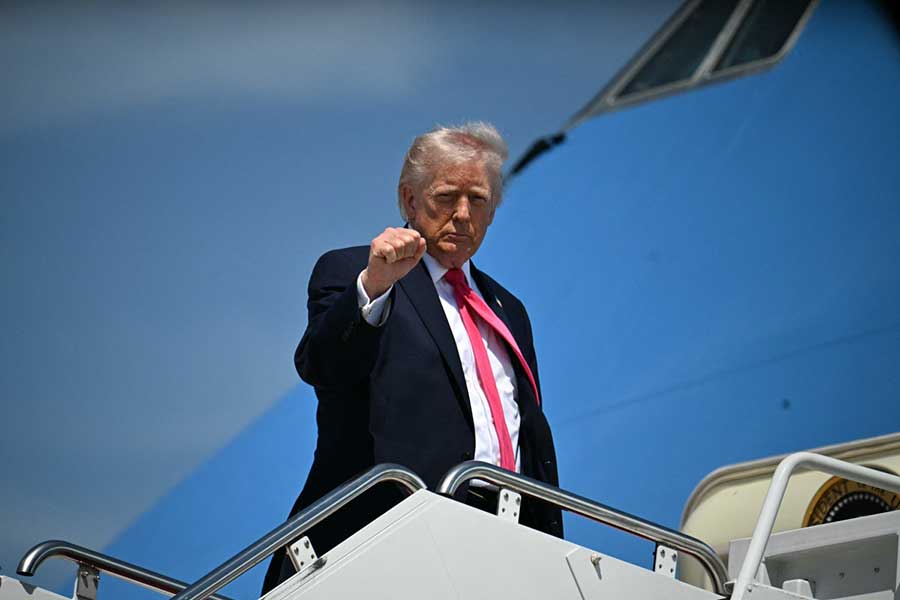
About an hour after Araghchi left Islamabad, Trump decided to cancel the trip entirely. He told Axios he saw no point in sending envoys on an 18-hour flight in the current situation of the negotiations, saying it was too long and that the US could do it just as well by telephone. Trump said the negotiations would be handled over the phone going forward, adding that the Iranians can call us anytime they want and that the US was not going to travel just to sit there. ProPakistani His explanation for canceling came in several waves. On Truth Social he wrote that there was too much time wasted on traveling and pointed to what he described as tremendous infighting and confusion within Iran’s leadership.
He wrote that nobody knows who is in charge, including them, and added that if they want to talk, all they have to do is call. CNBC But here is the part of the story that is genuinely fascinating. Trump told reporters before boarding Air Force One that Iran gave the US a paper that should have been better, but then interestingly, immediately when he canceled, within ten minutes, the US got a new paper that was much better. CNN Ten minutes. Iran’s delegation had barely landed in Oman before Tehran was sending a revised proposal. That is not a country that has walked away from the table. That is a country that was testing how serious America was about walking away from the table. And America called their bluff.
What Iran Actually Did in Islamabad
Here is what makes Saturday’s collapse particularly frustrating for everyone involved. Iran actually did the hard work.
Araghchi spent 20 hours in meetings with Pakistani officials, presenting Iran’s latest ceasefire proposal and conveying Tehran’s position in detail. The Iranian foreign minister expressed in his meetings that Iran demands the lifting of the US naval blockade as a pre-condition for talks. Al Jazeera That demand, the lifting of the blockade before talks can proceed, is Iran’s core sticking point and has been throughout these negotiations. America imposed the naval blockade after the first round of talks collapsed. Iran sees it as a violation of the ceasefire. America sees it as necessary leverage to keep pressure on Tehran.
The talks ended with no significant progress. Araghchi left Islamabad without committing to meet Witkoff and Kushner if they traveled to Pakistan. Al Jazeera When Araghchi finally departed, he posted on X that he had a very fruitful visit to Pakistan and thanked the Pakistanis for their efforts. Then he added the line that says everything about where Iran’s head is right now. He wrote that he was waiting to see if the US is truly serious about diplomacy.
That is a pointed message. Iran is saying the ball is in America’s court.
Why Trump Really Walked Away
The official reason Trump gave was the travel time. Seventeen to eighteen hours on a plane for a meeting that might produce nothing. From a purely practical standpoint, that argument makes some sense. You do not send your senior envoys halfway around the world without a reasonable expectation that the trip will be productive.
But there is more to it than logistics.
American officials have said they remain concerned that divisions between moderates and hardliners within the Iranian regime are hampering Tehran’s ability to coalesce around a negotiating position. Trump himself wrote that there is tremendous infighting and confusion within Iran’s leadership and that nobody knows who is in charge, including them. DAWN.COM This is actually a genuine problem in the negotiations. Iran’s political system is deeply divided on how to handle this crisis. The moderates around President Pezeshkian want a deal. The hardliners around the Supreme Leader’s office are deeply suspicious of any agreement with America. Foreign Minister Araghchi sits somewhere in the middle, trying to navigate both camps simultaneously.
The logistical situation would also have been challenging, as the US representatives were at least 17 hours of travel away, making them unlikely to touch down in Pakistan before the Iranians were expected to leave anyway. ProPakistani In other words, even if Trump had not canceled the trip, his envoys might have arrived in Islamabad to find the Iranian delegation had already left. The timing was always going to be difficult.
What Pakistan Is Left With
This is the part of Saturday’s story that deserves more attention than it has received.
Pakistan did everything that was asked of it. Islamabad hosted Iran’s foreign minister for 20 hours of intensive talks. Pakistan’s leadership, from Field Marshal Munir to PM Sharif to Foreign Minister Dar, engaged with Araghchi at the highest level. Pakistan facilitated the transmission of Iran’s latest proposal to the American side. And for weeks now, Pakistan has held this entire process together through sheer diplomatic persistence.
Iranian Foreign Minister Araghchi is expected to return to Pakistan after his visit to Oman, according to Iran’s official Islamic Republic News Agency. ProPakistani So Araghchi is coming back. Pakistan’s role as mediator is not over. The Islamabad process, as Pakistani officials have been careful to call it, continues even when individual rounds produce no breakthrough.
Trump told reporters on his way back to the White House that the cancellation does not mean a resumption of fighting, saying the US has not even thought about that yet and adding that we have all the cards. CNN The ceasefire, for now, holds. Just barely. And Pakistan remains the only reason it is holding at all.
Where Things Actually Stand Right Now
Strip away all the drama and the social media posts and the last-minute cancellations, and here is what is actually true as of Sunday morning.
The US and Iran are still talking, just not face to face right now. Iran sent a revised proposal within ten minutes of Trump canceling Saturday’s trip, which means Tehran is engaged and moving, even if slowly. Trump explicitly said the cancellation does not mean war is resuming. And Araghchi is expected back in Islamabad in the coming days.
The cancellation has raised questions about the durability of the current ceasefire, with energy traders already reacting as oil prices surged 13 percent last week amid all the uncertainty. CNBC For ordinary Pakistanis watching petrol prices and hoping for economic relief, that oil price movement is a reminder of how directly connected all of this is to daily life. Every day the uncertainty continues is another day of pressure on Pakistan’s economy.
The deal that almost was on Saturday is not dead. But it is not alive in any comfortable sense either. It is in that uncertain space that these negotiations have occupied from the very beginning, where war feels possible and peace feels just out of reach, and where Pakistan keeps showing up day after day to try to close that gap.
Araghchi thanked Pakistan warmly before leaving for Oman. The White House called Pakistan incredible friends and mediators. Both sides are still, in their own complicated ways, pointing toward Islamabad.
The story is not over. Not even close.